


Last Updated: October 27, 2026
Quick Summary
Home safety equipment for new homeowners should cover fire, gas, water, and medical readiness, in that order of urgency. Start with smoke alarms for each bedroom and level, a carbon monoxide alarm near sleeping areas, a fire extinguisher, and a fire blanket, then add leak alarms, a first aid kit, and a torch.
- Fit smoke alarms on the ceiling at least 30 centimetres from walls and light fittings.
- Test alarms monthly with the test button and replace batteries at least once a year.
- Keep a fire blanket within arm's reach of the cooker and never hide extinguishers in cupboards.
- Build one emergency kit in a single bag in a hall cupboard and tell everyone where it is.
- Change default passwords on connected devices before first use and test that app alerts arrive.
Table of Contents
- Your First 30 Days: A Home Safety Checklist for New Homeowners
- Smoke and Carbon Monoxide Detectors: Placement, Testing and Replacement
- Fire Extinguishers and Fire Preparedness for a New Home
- Choosing a Gas Leak Detector for Home Use, Rented or Owned
- Water Leak Detectors and the Hidden Cost of Water Damage
- A Home Emergency Kit Checklist That Covers More Than Storms
- Home Security Basics: Smart Locks, Video Doorbells and Motion-Sensor Lights
- A Room-by-Room Equipment Checklist and What to Buy First
- Build Your Starter Kit With Deposits back store
- Frequently Asked Questions
Your First 30 Days: A Home Safety Checklist for New Homeowners
Moving into a new property brings a long list of things to sort out, and home safety equipment for new homeowners rarely makes it to the top. That is a mistake. A home safety checklist for new homeowners needs to cover fire, gas, water, and medical readiness, in that order of urgency.
Week One: Detectors and Alarms
Buy one smoke alarm per bedroom, one in the hallway outside sleeping areas, and one on each level of the home. Add a carbon monoxide alarm near sleeping areas and on any floor with a fuel-burning appliance. Test every unit on arrival, note the manufacture date on the back, and put a reminder in your phone for the monthly test.
Week Two to Four: Tools, Kits and the Rooms That Matter
A basic toolbox, a first aid kit, a fire extinguisher for the kitchen, and a water leak alarm under the sink and near the washing machine. Add a flashlight and spare batteries to a single drawer you can find in the dark, and keep a fire blanket within reach of the hob.
Smoke and Carbon Monoxide Detectors: Placement, Testing and Replacement
Fit smoke alarms on the ceiling, at least 30 centimetres from walls and light fittings, and away from kitchens and bathrooms where steam and cooking set them off. Carbon monoxide alarms belong near sleeping areas and on any level with a boiler, gas hob, or open fire.
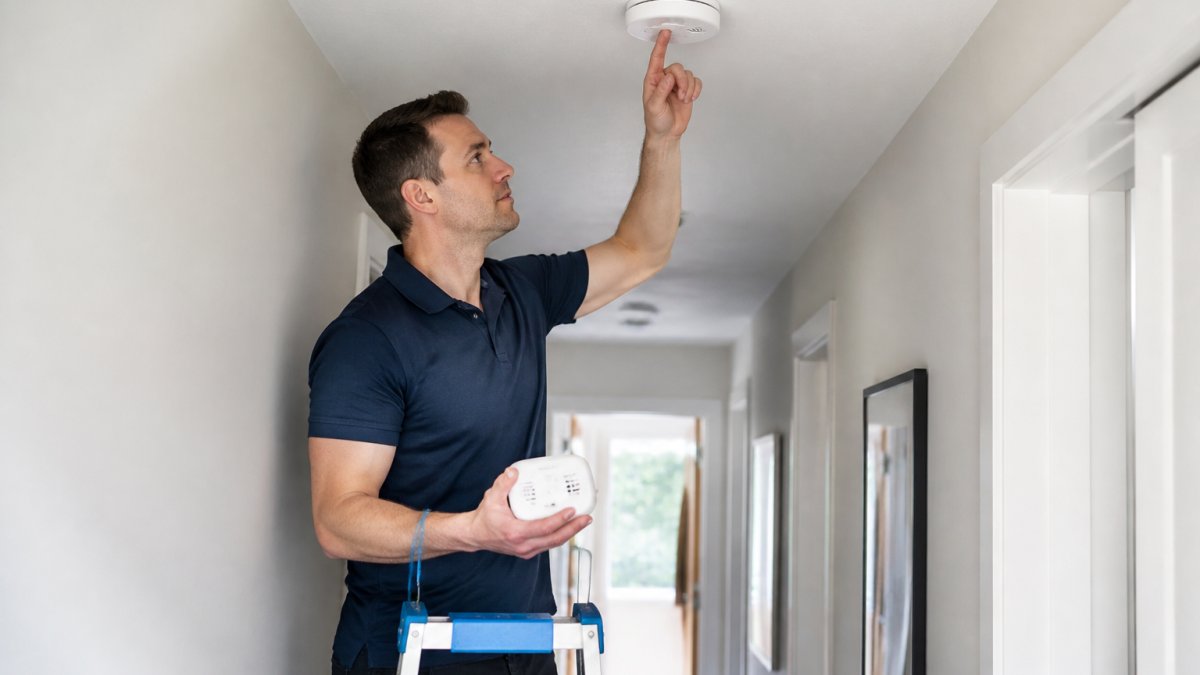
Testing is monthly via the test button, and batteries get replaced at least once a year unless the unit is sealed. Replacement comes at the end of the manufacturer's stated service life, not when the alarm starts chirping.
Fire Extinguishers and Fire Preparedness for a New Home
Fire preparedness goes beyond the extinguisher:
- Fit a fire blanket within arm's reach of the cooker
- Agree a escape route from each bedroom and practise it once
- Keep a torch by each bed
- Never store extinguishers in a cupboard behind other items
Choosing a Gas Leak Detector for Home Use, Rented or Owned
A gas leak detector for home is a sensor that sounds an alarm when combustible gas is present in the air.
Watch out: a detector is not a substitute for smelling gas and calling the emergency line. If you smell gas, leave the property first.
Water Leak Detectors and the Hidden Cost of Water Damage
Water leak detectors are alarms that can help monitor for water leaks.
Our wireless leak and drip alarms come in packs of one, two, or three. The listing says they cannot connect to Wi-Fi.

A Home Emergency Kit Checklist That Covers More Than Storms
A home emergency kit checklist can include supplies for injuries and interruptions. Build one kit that lives in a single bag in a hall cupboard, and tell everyone in the house where it is.
- Plasters, sterile dressings, and medical tape
- Antiseptic wipes and disposable gloves
- Scissors, tweezers, and a digital thermometer
- Pain relief and any prescription medicines
- Torch, spare batteries, and a power bank
- Bottled water and a few days of non-perishable food
- Copies of key documents in a waterproof bag
- A battery or wind-up radio for local updates
A portable first aid bag is available.

Home Security Basics: Smart Locks, Video Doorbells and Motion-Sensor Lights
A few practical rules we'd give any new owner:
- Fit motion-sensor lights at every external door and along dark side paths
- Put the video doorbell at chest height, not above head height
- Change default passwords on any connected device before first use
- Check that app alerts actually reach your phone by triggering the sensor once
Connected-Device Privacy and Reliability: What Competitors Skip
Smart security products are convenient, but each one is another account, another password, and another device that depends on your Wi-Fi. Most guides stop at "buy a video doorbell." The practical questions new homeowners actually face are about privacy, connectivity failures, backup power, and alert settings. Here is how to evaluate those trade-offs before you buy.
Privacy. A video doorbell or smart lock sees and records activity at your door. Before buying, check where footage is stored (local card versus cloud), whether the manufacturer requires an account, and what data the app collects. Change the default password immediately, enable two-factor authentication if offered, and review who else has access to the app. If a device requires a subscription for basic features, factor that into the cost.
Battery Operated Smoke Alarm For Home Photoelectric Smoke Detector LED Smoke →
Connectivity failures. A smart lock that depends on Wi-Fi may not work if the internet is down or the router reboots. Look for devices that retain local control (keypad or key backup) so you are not locked out during an outage. For video doorbells, check whether recording continues locally when the cloud is unreachable.
Backup power. Battery-powered doorbells and locks avoid wiring but need charging or battery replacement. Note the expected battery life and set a reminder to recharge before it dies. For wired devices, consider a small uninterruptible power supply for your router so security devices stay online during short outages.
Alert settings. An alert that never reaches your phone is useless. After installation, trigger the sensor once and confirm the notification arrives. Adjust sensitivity so passing cars or pets do not flood you with false alerts, and set quiet hours if the app supports them.
A Simple Layered Security Plan
Think of security in three layers: deter, detect, and respond.
- Deter: motion-sensor lights, visible doorbell camera, trimmed shrubs near entryways.
- Detect: video doorbell, door and window sensors, leak and smoke alarms (yes, they are part of home safety too).
- Respond: a monitored alarm or a neighbor who can check on the property, plus a list of emergency contacts.
A Room-by-Room Equipment Checklist and What to Buy First
Buying by room stops you doubling up and helps you see gaps. But a list alone is not enough: the value is in knowing where each item goes, how often it needs attention, and which purchases can wait. The table below adds placement and upkeep notes to the priority order, so you can buy in sequence and install correctly the first time.
| Room or Area | Equipment | Where to Place It | Upkeep | Buy First? |
|---|---|---|---|---|
| Hallway and landing | Smoke alarms, CO alarm, torch | Ceiling outside sleeping areas; CO near bedrooms | Test monthly; replace batteries yearly | Yes |
| Kitchen | Fire blanket, extinguisher, leak alarm | Blanket within arm's reach of hob; extinguisher near exit; leak alarm under sink | Check extinguisher gauge monthly | Yes |
| Bathroom | Leak alarm, non-slip mat | Floor beside toilet and under sink; mat inside shower | Test alarm quarterly | Yes |
| Utility or garage | Gas detector, leak alarm | Near boiler, gas meter, and washing machine | Test per manual; check batteries with smoke alarm schedule | Yes |
| Bedrooms | Smoke alarm, torch, escape plan | Ceiling; torch on nightstand | Practise escape route twice a year | Yes |
| Living areas | First aid kit, emergency bag | Hall cupboard or coat closet | Review kit twice a year; replace expired items | Second |
| External doors | Motion lights, doorbell, smart lock | Lights at each door and dark paths; doorbell at chest height | Change default passwords; test alerts monthly | Second |
| Loft and storage | Spare batteries, ladder | Near access hatch | Check battery stock annually | Later |
What to Buy First on a Tight Budget
A practical tiered plan looks like this:
- Tier 1 (week one): smoke alarms for each bedroom and level, one CO alarm near sleeping areas, one fire extinguisher, one fire blanket. These are the items that buy time in an emergency.
- Tier 2 (weeks two to four): water leak alarms for kitchen, utility, and bathroom; a basic first aid kit; a torch and spare batteries in a known drawer.
- Tier 3 (first three months): motion-sensor lights at external doors, a video doorbell, a gas leak detector if you have gas appliances, and a portable emergency bag.
- Tier 4 (when budget allows): smart lock, monitored alarm system, additional leak sensors for less obvious spots like behind the fridge or under the dishwasher.
Matching Equipment to Your Household
The checklist above is a baseline. Your household changes what matters most:
- Homes with young children: add cabinet latches, stove knob covers, and corner guards; keep first aid supplies where adults can reach them but children cannot; test smoke alarms monthly because children may sleep through them.
- Homes with older adults: prioritize non-slip mats, motion-sensor lighting on stairs and hallways, and a personal alarm or phone within reach; check that smoke alarms are audible from the bedroom.
- Homes with pets: secure cleaning products and medications; choose pet-safe extinguisher mounting heights; consider a pet alert window sticker so firefighters know animals are inside.
- Renters transitioning to ownership: battery-powered detectors and stick-on lights avoid drilling and move with you if you relocate; keep receipts for anything you install.
- People with disabilities: look for smoke alarms with visual or vibrating alerts, and keep emergency supplies at accessible heights.
Region-Aware Readiness
Your location changes the risk profile. In areas prone to power outages, add a battery or wind-up radio and a power bank to the emergency bag. In severe-weather regions, know where your utility shutoffs are (gas, water, electricity) and keep the tools to operate them near the shutoff point. In wildfire-prone areas, keep gutters and vents clear and have a go-bag ready. The room-by-room list above covers the everyday; a region-aware plan covers the rest.
Build Your Starter Kit With Deposits back store
Deposits back store provides environmental detection kits and home protection gear.
Browse our environmental detection kits.
Frequently Asked Questions
What safety equipment should every new homeowner have?
A water leak detector is available in the store's home protection gear range.
Where should smoke and carbon monoxide detectors be placed?
Smoke and carbon monoxide detectors belong on every level of the home. Put a smoke alarm inside or just outside each bedroom and one in the hallway, and mount carbon monoxide alarms near sleeping areas and any fuel-burning appliance. Keep detectors away from bathrooms and cooking steam, which cause false alarms. Test each unit monthly with its test button and replace batteries on a fixed date each year.
How often should smoke and carbon monoxide detectors be tested?
Press the test button on every smoke and carbon monoxide detector once a month and swap the batteries at least once a year, or sooner if a low-voltage indicator sounds. Most alarm units are designed to be replaced roughly every ten years. Write the install date on the back of each unit so you know when it is due, and keep a note in your home safety checklist for new homeowners so nothing slips.
Do I need a gas leak detector for home use if I rent?
Renters can use a plug-in or battery gas leak detector for home monitoring without drilling or wiring anything permanent. Place it near the boiler, hob or gas meter and test it monthly. If it alarms, open windows, avoid switching anything on or off, and leave the property before calling your supplier. Report any suspected leak to your landlord or managing agent in writing as well.
What should be included in a home emergency kit?
The store lists a portable first aid bag.
What home safety equipment is worth buying first?
The store lists a carbon monoxide alarm and a water leak detector.
